


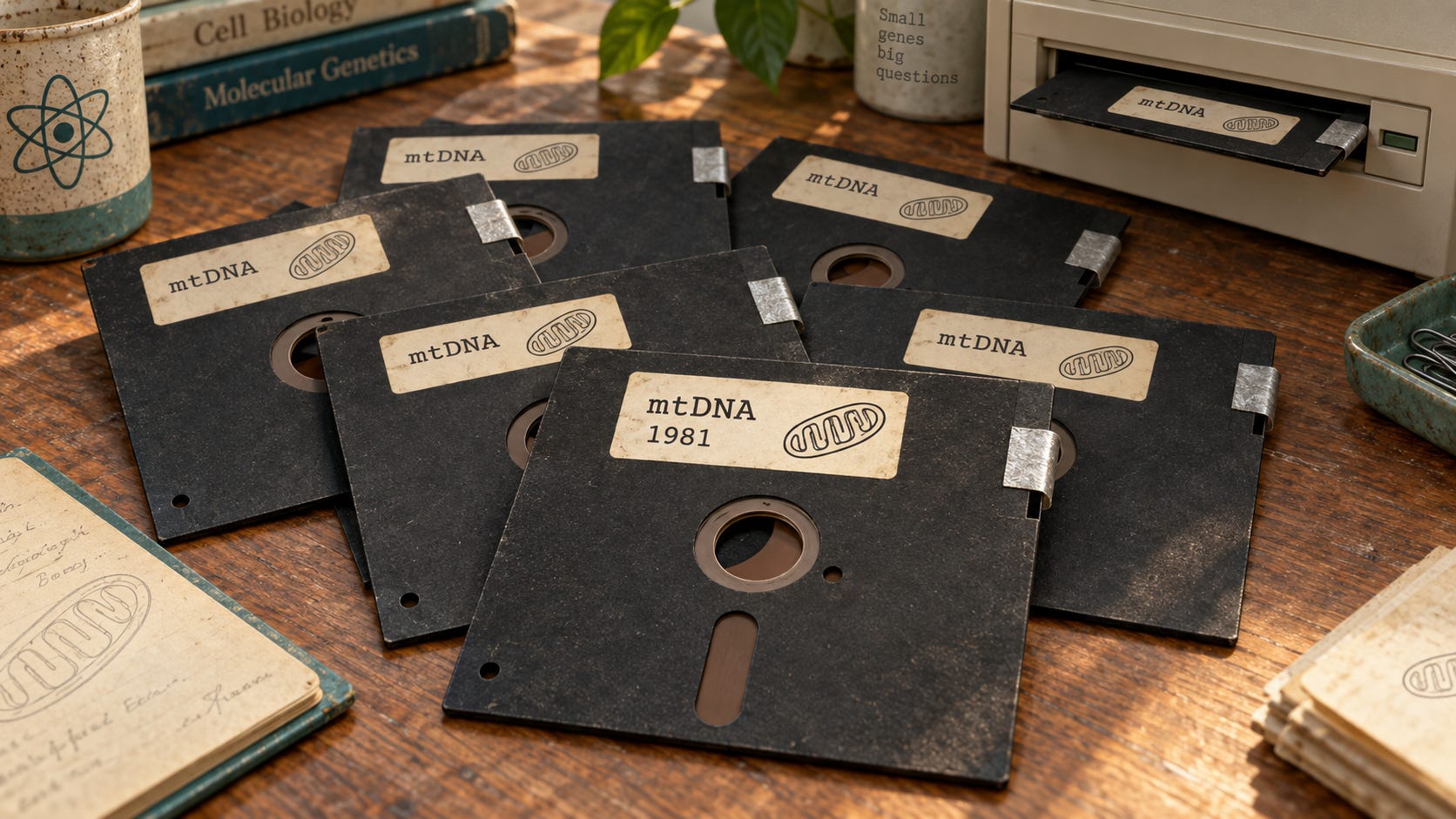
In 1981, researchers published the complete sequence of the human mitochondrial genome. All 16,569 letters of it.
More than four decades later, we can read mitochondrial genomes at scale. Reliably introducing new DNA, making it work, and keeping it there remains an unsolved engineering problem. Engineering nuclear genomes has become commonplace, thanks to advances including zinc-finger nucleases, TALENs, and CRISPR. The mammalian mitochondrial genome remains much harder to work with.
Cultivarium is launching PRIME, a multi-year effort supported by ARIA’s Precision Mitochondria programme, to develop genetic tools to study and engineer mitochondrial genomes.
Mitochondria are busy and privileged compartments. To reach the matrix, proteins carrying the right targeting signals are unfolded and threaded through gates in two membranes. The inner membrane also sustains the electrochemical gradient that drives ATP production. Getting nucleic acids in without compromising the organelle remains a longstanding bottleneck.
This challenge is particularly curious because researchers introduced DNA into yeast mitochondria and algal chloroplasts back in 1988, using DNA-coated particles. Chloroplast engineering has also used polyethylene glycol to aid DNA uptake, and researchers have demonstrated carbon nanotube delivery for transient gene expression.
Mammalian mitochondria are not as malleable. Scientists have selectively eliminated mutant mitochondrial DNA using zinc-finger nucleases and TALENs, and changed specific DNA sequences using base editors. But reliably introducing new DNA into mammalian mitochondria and maintaining its function over time remains a major hurdle.
We think of mice and humans as model organisms. Apparently, the mitochondria within are another matter.
Cultivarium was established to tackle non-model biology at scale. We have spent years working to deliver nucleic acids into a broad range of microbes and to give researchers the tools to study and engineer them. Mitochondria were an unexpected place to find familiar problems.
Their history certainly had our attention: descendants of bacteria, carried inside our cells through an ancient partnership that helped give rise to complex life. But a family tree is hardly a mandate. We wanted to understand what we could contribute to a field whose researchers have spent decades studying these systems.
The more we read and talked with people in the field, the more recognizable the bottlenecks became: delivery, gene expression, genetic stability, and a vast space of methods and parameters to explore. These are the kinds of problems our organization has been working on for years.
PRIME brings our experience and engineering infrastructure to DNA delivery, expression, and persistence in mammalian mitochondria. Our custom automation and biology-focused software stack let us systematically test combinations of nucleic acid payloads, delivery conditions, buffers, and timing. We’ll use the latest AI models, where useful, to analyze the data and support experimental decisions.
Working with mitochondrial researchers, we will develop measurement techniques and shared standards to establish which methods work and how reliably. We will start with nucleic acid delivery into the matrix of isolated mammalian mitochondria. We will also develop cell-free systems and genetic parts to study expression, and investigate ways to help engineered mitochondrial genomes persist within cells.
These tools could help answer questions across medicine and the biology of aging. Mutations in either mitochondrial or nuclear DNA can cause primary mitochondrial disease. Mitochondrial dysfunction also appears in cancer, neurodegeneration, and aging, where its role can be harder to disentangle. Better control of mitochondria will help researchers test whether this dysfunction is driving these processes, responding to mutations or damage elsewhere, or feeding a cycle of both.
Developing the technology is the first step. PRIME aims to provide methods that other laboratories can use and build on, opening more experiments to established mitochondrial researchers and newcomers alike.
ARIA’s longer-term vision includes reprogramming mitochondria to fight disease and expand what cells can do. Reliable mitochondrial engineering could help researchers give cells new metabolic capabilities or improve their ability to cope with changing energy demands. We’re excited about this vision and how it fits our broader goal: to study and engineer organelles and symbionts for beneficial biotechnologies.
We’re grateful to ARIA for supporting PRIME and look forward to working with the mitochondrial research community. Cultivarium began by building tools for biology beyond the usual model organisms.
Some of that hard-to-access biology turns out to be inside us.